Erasure
Poetry
Project
by Mahshid Mayar, PhD funded by the German Research Foundation (DFG)
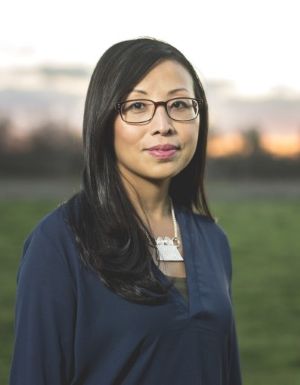

Mahshid Mayar: Hello and welcome to the third installment of Sounds of Erasure. My name is Mahshid Mayar and I'm thrilled to be co-hosting today's interview together with my colleague and fellow erasure researcher Michael Fuchs. We are honored to welcome Mai Der Vang: poet, artist, and author of Afterland, Yellow Rain, and, most recently, Primordial, all poetry collections that have been published by Graywolf Press in 2017, 2021, and 2025.
Many of you likely know Mai Der's multiple award-winning Yellow Rain, which received the Lenore Marshall Poetry Prize from the Academy of American Poets, an American Book Award, and a Northern California Book Award. Yellow Rain was also a finalist for the Pulitzer Prize, the PEN/Voelcker Award, the LA Times Book Prize, and the California Book Award. Mai Der Vang's debut collection, Afterland, won the First Book Award from the Academy of American Poets. It was also long listed for the National Book Award in Poetry and was a finalist for the Kate Tufts Discovery Award. We at the Erasure Poetry Project were especially excited to see her third collection, Primordial, released this past spring.
Michael Fuchs: Mai Der's writing has been supported by Guggenheim and Lannan Literary Fellowships and her poetry has appeared in leading venues such as Poetry Magazine, Tin House, and the American Poetry Review. Her essays, including the outstanding "Poetry as Homeland" (2017), have been featured in the New York Times, Washington Post, the Academy of American Poets, and more. She is also the co-editor of How Do I Begin? A Hmong American Literary Anthology, created with the Hmong American Writers' Circle. Currently, she teaches in the MFA program at Fresno State and serves as the Endowed Chair in Creative Writing at Texas State.
So, together with Mahshid, I wish to welcome you, Mai Der, to Sounds of Erasure and more specifically the third edition or episode of our interview series. Thanks for being with us.
Mai Der Vang: Thank you. Thank you so much for having me here. It's an honor.
MM: Thank you so much, Mai Der, from my side as well. We have a number of questions and would love to actually engage in a conversation with you about at least some of them, depending on how much time we have ahead of us. I would like to begin by asking you if you could tell us a bit more about your personal history of encounters with erasure, be it in visual arts or in poetry.
Solmaz Sharif, who is also a fellow erasure poet, in her 2013 essay "The Near Transitive Properties of the Political and Poetical Erasure," writes about her first impressions as to what erasure is and what it does, writing that "the first time that [she] confronted erasure as an aesthetic tactic," she calls it, she "was horrified." She writes, "I know I thought of erasure as what a state does." And my question is: How was it for you? Do you remember when the first time was that you actually encountered erasure? And did you have comparable sentiments, like a sense of shock or horror or deep-seated discomfort when you first came across erasure as an aesthetic practice?
MDV: Thinking back to my first experiences or exposure to it, I think I came to erasure, or I believe I came to erasure by way of blackout poetry. At the time, it was something that people were doing on the one hand for generative ideas and for playful exercises in poetry. And then there were a couple people who were also doing it for political reasons, too. I was intrigued by it, I was interested. And it was something that I had heard about, seen people trying out. And it wasn't until the discourse around it focused on erasure that I really sort of began to pay attention to it. Initially, I was a little troubled by the idea of people doing it for fun. Although I'm not against people doing it for fun. But when I dug into the discourse around it more deeply and began to see that there had to be more--and that there was more--to this idea of striking out text, I was troubled. And I was troubled by the idea of committing a kind of violence to the language. And yet, at the same time, as a Hmong writer, who has grown far too familiar with not existing in the literature, I was also not surprised, either, that one would do something like that to the text.
In some ways, I can certainly identify with Solmaz's sentiments of horror and feeling just shocked by it. But I think I was also, sadly, not too surprised. As a Hmong writer, I come from a community that doesn't always exist in the literature. I remember growing up and not reading anything by a Hmong writer, or not even knowing if Hmong writers existed, anyone like myself. And so, I'd gone for most of my life with not having read or seen the phrase "Hmong" or "Hmong literature" in most things. And so, it made sense that maybe I might not exist in these other places too, and that there is a kind of erasure to the position that I hold as a person in society. So, it takes me all the way back to thinking about blackout poetry and the implications around why people were doing it, and when people were doing it, and then that leading me to erasure.
MF: What you said leads us to our second question, because you mentioned this point of writing from a position that doesn't really exist. This is one of the guiding topics in your three poetry collections--this question of histories that have been covered up, that have been forgotten, or outright erased: the chemical attacks on the Hmong people in Yellow Rain or the saola's looming disappearance and relationship with the Hmong in Primordial. So, you hinted at that already, but what does erasure mean in your work, both in terms of symbolism and also on a practical level? How do you actually approach the writing process? How do you, did you approach writing Yellow Rain, for example?
MDV: When I was thinking about how my work could be in conversation with these aesthetics, with erasure, with collage even, I was really keen on trying to explore them from the position of belonging to a people or a community or a culture who have been erased. On the one hand, I could very well be the one doing the erasing, but it's so much different to be in the position of having been the one who was erased or the one who was at the threat of being erased. And so I come to the work in thinking about that quite a bit: How do I examine and investigate that through poetry? How do I participate in that in ways that might make me complicit perhaps to the act but also have to be the one reckoning with it, at the same time--reckoning with it historically and presently. So for me, it's always been thinking about that positionality of being the one erased versus being the one who's doing the erasing and who is doing the erasing. I think it matters when we think, when we talk about erasure; it matters who's doing the erasing and what they're erasing from; what they're drawing from to erase.
As I see it play out in my own work, I always think about erasures as means to reopen the gaps, to investigate the ruptures that have been taken away. There's something about looking at a piece of erasure or even writing a poem that engages with the act of erasure to some degree, that is a way of also investigating what's missing: What are these ruptures telling us? And "ruptures" meaning: the ruptures in the literal spaces of the page, and also ruptures in the historical memory that's been taken away from whatever is gone.
I find that so akin to who I am as a Hmong person, because Hmong people having been coerced by the US government and by the CIA to serve as a proxy army for them during their war with Vietnam. It was an entirely covert operation. So Hmong people have this very complicated, at least I as a Hmong person, have a very complicated relationship to this idea of secrecy, secrecy and things that are hidden, things that are taken away, things that are erased, things that after you no longer need them, you can dispose of them in the same way that Hmong people were abandoned by the US government when they withdrew from Vietnam in 1975.
There's a way in which that relationship gets complicated through this idea of text and those ruptures in the text. I also think that erasure for me personally is a way to reshape language as a way to reshape the archives and to account for the things that have been missing, the things that have been disappeared or forgotten or expunged. My relationship to archive is so interesting in that I spent years digging through declassified materials to write Yellow Rain. The archive was my go-to and my source for a lot of those documents. And so I found it really problematic and sort of strange to think that the largest repository that exists out there on Hmong people's involvement in this war is in these archives that are mostly redacted. I have a very difficult relationship to navigate this awareness that you may never be able to have access to everything you need to know about where you came from. And for me, that's where my work tries to begin: investigating those ruptures and investigating the things that have been disappeared from who I am and from the larger Hmong collective written memory. And there is no written memory because it's all in those archives that we don't have access to.
MF: This notion of things that have been disappeared--which you mentioned a couple of times already--echoes in the opening of Yellow Rain, where you quote from the translation of Raul Zurita's INRI, which recalls the violence and silencing of people during Pinochet's dictatorship in Chile. But when I read that the first thing that I thought of was 9-11, which has overshadowed September 11, 1973, that is the coup in Chile. So, I was wondering whether this connection between Hmong disappearance and the disappearance of the disappeared ones in Chile--but also other parts in Latin America where it's this common thread--made you draw on Zurita's work here or whether there was something else to it.
MDV: I love that you thought about this, and I love that you made the connection. Because for me, having spent so many years digging through Yellow Rain--I did about a decade of research on it--you're so immersed in the language and in the documents and in the testimonies of what people went through with Yellow Rain, it can make you spiral. For me, it was very grounding and very meaningful to step outside of Yellow Rain and to look elsewhere, look elsewhere around the world and to connect and also be able to create a sense of emotional solidarity with something that happened somewhere else, to know that we weren't alone and that we aren't alone in what happened to us. And so I looked to INRI, Raul Zurita's work, who has been so poignant and so powerful in relaying this very, very troubling and problematic and traumatic history. And I saw INRI as this powerful epic elegy, and especially in the invocation of the land, the topography, and the mountains, the flowers, the oceans, as a way to commemorate the dead and the missing and the lost and the forgotten, the abandoned, the ones who've been taken. I just found so much grounding in that. I think we don't think about September 11th when it comes to Chile at all, and we think about it in the now made-conventional "9-11" sense. And I want to think about that for sure. I want to remember what happened there in 1973.
It's interesting because what happened in Chile preceded Yellow Rain by only a few years: this was all happening within a few years of each other--the coup in Chile and then Yellow Rain and the withdrawal from Vietnam in 1975. This was all within the same timeline, almost, of existence. And then to also think that the U.S. government had a hand in fomenting the coup and its disastrous results for the long term as well in the same way that they also did in Laos with the Hmong people and the secret war and elsewhere around the world. I could not help but want to see those connections and allow my reader to see those connections with me, but obviously without making it so direct or explicit for my reader and letting them make those connections on their own.
MF: Another type of erasure that we were thinking about that anticipates a talk that Mahshid and I will have on digital erasure poetry in a few weeks is the difference between the digital versions of your works and the book versions. In the e-versions of Yellow Rain and Primordial, some features seem to be not properly "translated": line breaks depend on your font size setting, what I tend to think of as timelines in Primordial (these ups and downs that you have spread across two pages) don't properly show up on the e-versions, on Kindle in particular, or even the word clouds in "I Understand This Light to Be My Home." They come across differently. Since I first read the Kindle edition, I was honestly also thinking that in the "Camera Trap Triptych" in Primordial, there was a photograph missing, but there is no photograph, which is part of the point here. But we were wondering whether you think that reading your poems in digital format kind of loses something, whether there's something lost in translation, whether looking at them in a digital format versus book-bound produces a different experience.
MDV: That's an interesting observation. I'm aware of the fact that the versions are different and it's something that I grapple with all the time when I write a poem where I'm doing something visual and then my editor or my publisher tells me, "We don't know how it'll translate, but let's just go with it anyway." "Are you going to be okay with it?" We have conversations about how to negotiate that. For me, it's always a struggle. It's a struggle to know that the reader who looks at the e-version of the book may not see the intentional visual quality of the work. My hope is that they do get that. My intent would be that they get that however they read the book.
But I also think that there is a fleeting nature to the way that we think about books. Books are made of paper, and they will live for as long as we take care of them. And so, there's a fleeting quality to a book as much as there's a fleeting quality to all of our lives. And maybe even language is fleeting, too. Language goes away, too. I come from a primarily oral culture. Hmong people didn't have a written writing system until the 1950s--that was developed by missionaries who were coming to Laos to evangelize Hmong villagers. We didn't have a written language. We relied on oral tradition to pass down everything. As I've thought through how to negotiate the changes between the print version, between the e-version, and between my reading version of these poems, my performance version, I remember that all of this work is fleeting, and you want to hold onto it so much. You want to retain its true essence as much as possible, but we won't be able to. It's hard to do that. So, I keep in mind that how much has been able to survive, even without the print, even without the books, how much we've been able to survive, to maintain and to sustain just through memory. That's a very poetic response to this idea of print books, but it's rooted in having come from a culture that didn't have books for a very long time.
MM: You mentioned a number of points that I'm going to draw upon in asking that next question, which brings me to the main focus of this interview series. You were just talking about the oral tradition of the Hmong culture. And you also said that there is no written memory when you were talking about archives and what you found in the archives. Building on that, I want to ask you to tell us a bit more about the soundscapes of erasure, be it in public reading events, or even if someone is reading it silently, individually on their own. It seems like erasure poetry generates a certain, unique type of soundscape that tests the limits of visibility, of legibility, but also of orality. I was wondering: How do you, or how would you as a poet of erasure, but also as a reader of erasure poetry, think about this soundscape when you encounter the page-bound erasure, which has a certain materiality to it. So how would it sound if you performed the gaps in some of your poems, for example, "A Body Always Yours" or the blacked-out names in "Specimens from Ban Vinai Camp, 1983," or how to convey the visual dimensions of parts of Yellow Rain and Primordial--for example "I Understand This Light to Be My Home." In other words, I'm trying to push you to think aloud about your policy in terms of reading the illegible bits, encountering and giving sound to, or sitting with the silence of the ruptures, as you also highlighted.
MDV: When I'm considering how I might read some of these poems to an audience or how I might share the work in an oral capacity, I think of the obvious way to pause and be silent in some of those moments where there is an intentional reduction or there's a reduction in the source text that I have retained in the poem. It's very common to do the pause and I've done that too, to just take a moment to pause and be silent in that instance. When you do that, sometimes it makes the audience a little uncomfortable; whenever you're silent, people get quiet and they're like, "What's going on?" There's a way to allow for those silences and those ruptures of quiet to destabilize the reading of the poem can make the audience a little unsettled. And maybe that's a good thing--to make people a little uncertain about it. That's why the silences can be a really powerful gesture in a performance or a reading of a poem. Because it is about sort of unsettling, it is about helping and allowing the listener or the audience to absorb a bit of that discomfort, and to be troubled, to be troubled by the things that they won't be able to make sense of in the same way that the speaker of a poem might not have made sense of it. That experience is mirrored in the reading, which is then transferred to the audience. Maybe that's why those silences can be so provoking--people don't want silence. People want clarity. They want someone to read and entertain them or maybe engage them, but then when are up there and you don't say something, or what you're saying is only fragmentations of language--that can produce a little bit of discomfort.
I also have thought about using hand gestures. I do that in private when I'm composing and revising: to read out loud. I am someone who loves to read out loud when I write, and that's why sometimes it's a very slow process. Just composing a poem is a very slow process because I take it word by word, line by line. I read out loud, and I repeat what I say quite a bit. But when it comes to how I compose an erasure and also try to read it out loud to myself, it's sometimes doing something visually with my fingers, taking my fingers and slashing it out across my chest, just to do a visual body movement that is a reflection of that redaction, of that silence. So, there's a bodily reaction that can happen as well.
But all of that is the impulse to want to scream and react and respond to those ruptures, to those interruptions, to those moments of textual destabilization that can be necessary in helping to bring a greater truth to what is happening and to bring a greater truth to the poem--to allow for that and to be inconsistent and make us uncomfortable, to be irregular in the way we talk, in the way we move our bodies, in the way that we allow for quiet. Silence in an absence of a voice can allow for that troubling feeling that we're trying to evoke.
MF: I think we're already moving toward the end of our conversation. To tie everything together and wrap it up, we wanted to go to the end of Yellow Rain, where you write, "It was never about finding out what actually happened to the Hmong," which seems to be such a key line in that collection. It feels like a statement about history--that maybe the goal isn't to put down a single, specific truth, but to reveal how stories get told or silenced--which is something that you mentioned repeatedly before. Is that the point of that line, or were you trying to convey more with that?
MDV: I think it's a really fantastic observation, first of all, is to see how much is embedded into that one line. Because I see it in multiple ways. I see it exactly the way that you just described, too: that in the end, even though the intent, or the research objective, might have been to find this one single truth or this one definitive truth, what I ended up discovering is that the truth is what you end up making of it. No one makes it for you. You end up making it what you will. That was the most troubling but most profound thing that I came across through the research: I had tried so hard to try to get to the bottom of Yellow Rain and I was so invested in that, and I was committed to seeing how far I could take that, but in the end, there was a truth that came out and that truth was for me. It was a personal truth. It was the realization that even as I may never get the answers, I know that there had been a harm that had been done, that the documents indicate and reveal that: that the Hmong refugees who came forward about Yellow Rain, they were just being used as pawns by the political left and right and by empire to push forward their particular agendas--the agenda of increased warfare, the agenda of de-escalating warfare. These countering agendas intervened so much so that the Hmong narrative began to retreat and recede into the background. And in all of that, it had never been about finding out what happened to these refugees. It had always been about these two conflicting political agendas at war with each other, trying to exploit the Hmong story of trauma and also trying to invalidate the Hmong story of trauma.
Meanwhile, the refugees and the Hmong people who suffered from Yellow Rain retreated into the background and everyone forgot about them. So, that was the truth that I came to. That didn't give me the answer to what was happening with Yellow Rain, but it led me to a deeper understanding of what I think happened. That gave me a sense of closure, the closure that I needed. Maybe you don't get to the truth itself or that one single truth, but you get to the root or the extent of how far that truth goes--or how far the silencing goes. There was a situation in which these people were kept silent, and it's only through realizing that no one makes the truth for you. You have to be able to come to it on your own, that you realize how far that silencing goes. And you can live with that by the end. You live with that, but the pain of not ever knowing what actually happened is still there.
It's a very difficult thing to negotiate--the practical and literal level of knowing that in this Yellow Rain investigation, it had never been about wanting to actually find out what happened to the Hmong people; it's never been about really helping to sift through the trauma and the atrocities of the attacks and trying to seek some kind of redress for it. It had never been about that, but it had always been about these two conflicting political views who were leveraging and exploiting the Hmong story, or they were invalidating the Hmong stories. And I had to come to terms with the fact that I wasn't going to get the answer I sought. But I think these are the kinds of things that you come to on your own and you reach a point where you realize it's not about that singular truth, but it's about my personal truth: What am I offering to my reader that is going to allow them to be able to share in this with me and to mourn this with me as well?
MM: I was just thinking of this notion of archival stories by Antoinette Burton, and how you were telling us about stories despite the archive. It was a journey, a poetic journey through which you were trying to question the archive and then arrive at stories that the archive wasn't interested in at all, even though they existed, maybe not in written form, maybe not recorded as a document that ends up in an official archive of empire, but still stories that are worth exploring and worth finding answers to questions through them. I just find absolutely beautiful. We've talked about a number of topics and that gives me pleasure to say that we are almost at the end of this wonderful exchange that we had with you today. But I want to ask if there are any topics, any aspects of this conversation in relationship to your published works or if you have any future projects that would involve erasure, the soundscapes of erasure, that you think you would still like to communicate to our listeners.
MDV: There's so much still to do. The workload is still heavy, and there's always a new project on the horizon. I don't have anything immediately that I'm invested in. With finishing Primordial, it was a chance to step away and be able to regroup and debrief myself and where I want to go next with the work. But I think erasure, or the work of documentary poetry, will always be very close to my heart and close to the work that I will continue to pursue because there's so much still to uncover. And given the state of the world that we live in now, we are going to see so much more of this kind of work in the years to come.
MM: Absolutely. Thank you so much from my side. It was such a pleasure hosting you today and having this conversation with you on sounds of erasure. Thank you so much for your time and for having shared your personal but also your poetic thoughts with us.
MDV: Thank you so much for having me. It was such a pleasure.
MM: Thanks everyone for having listened to this episode of Sounds of Erasure. Have a fantastic rest of the day and listen to us again soon.