Erasure
Poetry
Project
by Mahshid Mayar, PhD funded by the German Research Foundation (DFG)
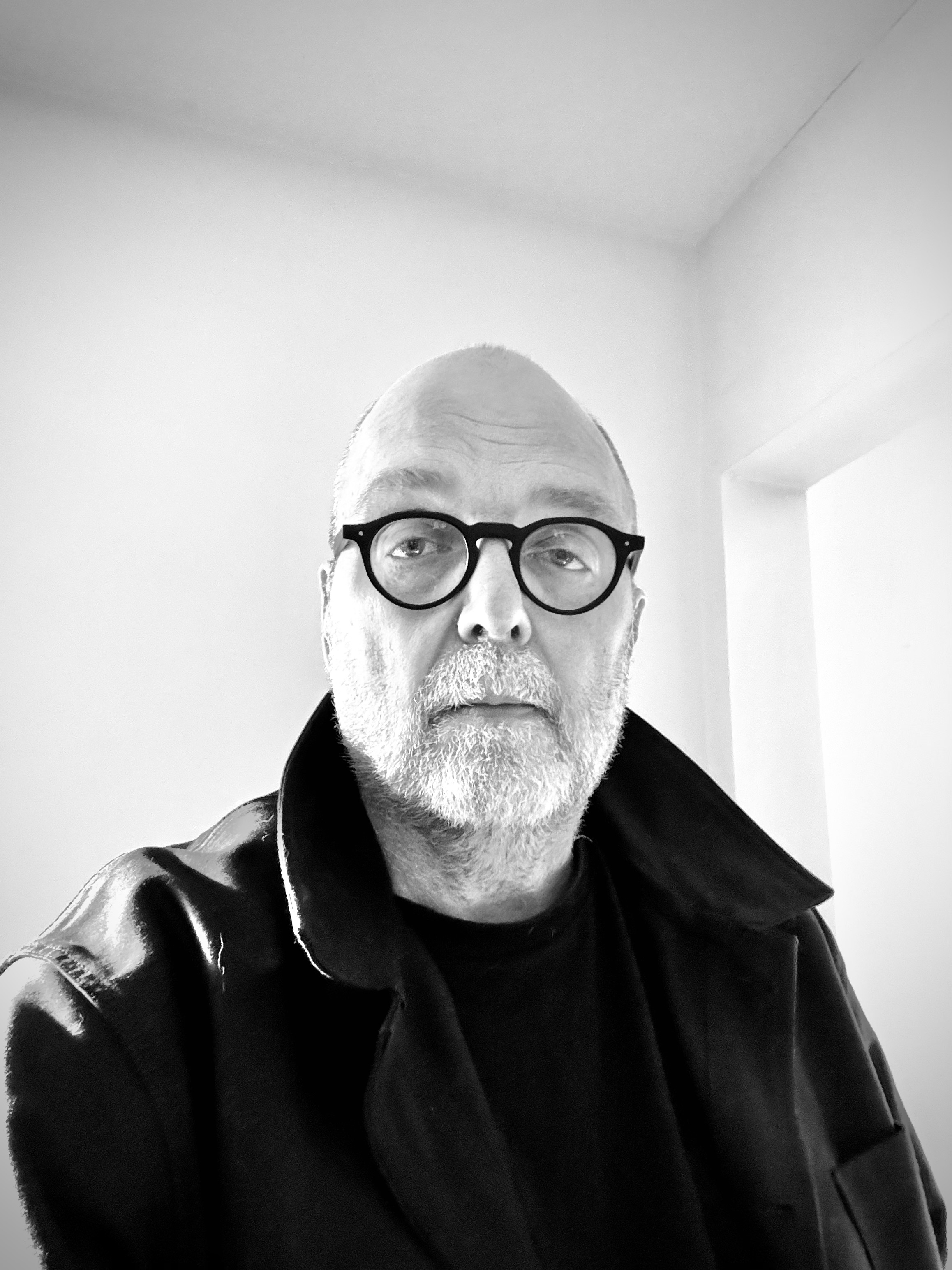

Mahshid Mayar: Welcome back to Sounds of Erasure. My name is Mahshid Mayar, and I will be co-hosting this conversation with my colleague Sandra Tausel. Today, we are delighted to welcome Mark Nowak, an award-winning poet, social critic, and labor activist.
Sandra Tausel: Hi everyone, I’m Sandra Tausel, and I’m very excited to introduce today’s guest. Mark Nowak is the author of Revenants (2000), Shut Up Shut Down (2004), Coal Mountain Elementary (2009), and Social Poetics (2020), all poetry collections that have been published with Coffee House Press.
Mark has been awarded fellowships from the Guggenheim (2010), Lannan (2015), and Creative Capital foundations. He has led international poetry workshops for workers and trade unions, is the founding director of the Workers Writers School, and is currently a professor at Manhattanville University.
Today, Mahshid and I are excited to talk to him about erasure techniques in his fifth poetry collection titled . . . AGAIN, which will be out this April, also by Coffee House Press. The collection draws on several source documents, for example, the C-SPAN Live Feed from the attack on the Capitol on January 6, 2021, the white supremacist manifesto of the Buffalo shooter in 2022, and the United States House of Representatives Task Force report on the attempted assassination of Donald J. Trump. Mark uses all these sources and works with erasures to grapple with the landscape of late-stage capitalism and the consolidation of white nationalism in MAGAmerica.
And with that, we’d like to welcome Mark Nowak. Thanks so much for joining us today.
MM: Thank you so much from my side as well, Mark, for having agreed to join us for this interview for Sounds of Erasure. I would like to start with a question that we usually ask all our interview partners who have kindly agreed to join us for conversations over the past couple of years. And that is if you would tell us a bit about your personal history of encounters with erasure in forms of poetry and visual arts. And how do you connect to erasure poetry? To be specific, we were wondering what you think poetry, especially erasure poetry, means and can do, specifically in the politically charged moments that we are currently living in. Do you have any erasure poems or erasure poets that are your favorites, also? Thank you.
Mark Nowak: Yeah. Thank you for having me on the podcast. And, you know, I think I always go back to the fact that before I was a poet in high school and in college, undergrad, I was an electronic musician. So, I played synthesizers, program drum machines kind of in the 1980s, early, mid 1980s. And so that kind of just exposed me to tons of like tape music, overdubbing, erasing cassettes, layering, collage, montage. So that’s like I entered poetry with that kind of in my toolbox or toolkit already.
I wasn’t like I didn’t enter reading, I don’t know, Robert Frost, or William Carlos Williams, or something like that. That kind of came later. So, the methodology of erasure was already kind of built into my aesthetic artistic practice. When I got to grad school, a poet I was studying with, Theodore Enslin, put me in touch because of my interests with a poet, Ronald Johnson, who is, of course, famous for the book that he sent me, a signed copy of his book, Radi Os, an erasure of Paradise Lost. And we had a correspondence. Again, this is probably late 1980s at this point in time.
And then my other teacher in grad school via correspondence was John Cage. And Cage, you know, like we can even let everything about him was about the notion of modification. Right. And so, I kind of consider erasure in a continuum with modification practices like the prepared piano pieces, early ones of his were modifying or erasing, if you will, a typical piano sound and changing it into something closer like percussion, like Gamelan, et cetera.
I know that his piece “4'33"”, the silence piece, is something that had a huge influence on me because it erased notes, it erased sound, although it kind of proved that sound still exists even when we try to erase it. And during the pandemic, I did this, what I started calling listening projects, because of electronic technology. You’re now, like I was able to listen to just about all of John Cage’s compositions in historical order, from his very first composition to his very last. And I did a performance when I got to “4'33"” of just doing Cage’s piece during the pandemic when, you know, it was so much quieter, and there were so few people around, and it just reinforced that relationship between erasure, like kind of, almost the impossibility of erasure because the possibility of sound is always there underneath the erasure. So, I would say that’s like, those are my early influences in kind of erasure practice.
MM: Fantastic. I mean, you mentioned “4'33"”. I usually teach sound studies, just starting with “4'33"” and sending my students on an “ear cleaning walk” with “4'33"” and registering the emotional response, and then, building on that, the intellectual response.
Fantastic. Another aspect of what you were just talking about in terms of the modification and the material that we draw upon in generating erasure and thinking about the possibilities and the impossibilities that come with it, is the fact that erasure, specifically the examples that are 21st-century examples of erasure, are very document- and archive-minded.
So, they are not only criticizing and modifying, but also, they are expanding existing archival records of the past and of the present. And this resonates rather powerfully in your forthcoming book . . . Again. The book has five sections of equal length, starting and ending with what you call “Fall.” And we’re curious, how would you relate this againness – starting and ending with “Fall” – and the sense that the fall is inevitably followed by another fall in the very structure of the book to the unique historical consciousness that your poems carry and the fact that there’s so much documents and documental qualities of the text that you draw upon.
MN: Yeah, it was, you know, I started writing the book during the COVID lockdown. And I didn’t really just, I didn't start writing it. I just started taking notes and figured out that it could be a book. And when I figured out it could be a book, was October of 2020, which was when Trump was up for reelection here in the US. And I got unexpectedly caught in a Trump rally in my car. And that is the first photograph in the book. It’s this pickup truck with lots of flags, but there’s also like construction cranes that were flying Trump flags. The streets kind of lined with people with, you know, signs and waving flags and screaming at people driving by in their cars. And I was like, you know, this can’t be happening again. But it was, right? And so even the cover of the book is, you know, the book is called . . . Again, because it's an erasure of the first three words of the slogan, “Make America Great Again.” That’s why there’s the ellipsis before the “again.”
So, you know, I was really, that’s where the book kind of started. And that’s where the practice started in that season of fall. That's when I decided I wanted to try that first section as an abecedarian prose poem. And, you know, order each section in alphabetical order. I love the abecedarian form. I love that kind of organization. I hadn’t written one before. You know, it’s how we first learn the language as little tiny kids, you know, we, or with our kids, we read them the ABC reader, A is for Apple, Z is for Zapatista, like that kind of range of the language, but everything, you know, like, the encyclopedia, the OED, like all of this alphabetical order around us.
And so, I wrote that one. And then, you know, a few months after that, January 6th happened. The, whatever you want to call it, riot at the US Capitol. And watching that on TV, I was like, this could be a second part of the book. And I wonder if I could do an abecedarian again. And then it was just sort of, as we say, off to the races from there. I had a form; I had a seasonal layout. I kind of like the seasonal layout. In the Worker Writers School we work with haiku a lot, which is a kind of such a seasonal form. But, you know, even everything to like, Carl Ove Knausgård’s four seasonal books that he wrote after My Struggle, like, I just like the seasonal format in a way. And so that’s how that organizational pattern kind of started. And working with various, you know, that the second poem on January 6th is the first one that starts to work with kind of archival material more so. And then that practice carries through the rest of the book.
ST: Yeah, that’s fascinating. Also, with the image at the beginning, I think that’s very telling. And I was going to follow up on that and ask you about the last part of the book, actually. So, the chapter that’s titled “Fall (…Again)”, because that is the only part where you consistently have images placed next to documental texts or actually a list, an alphabetized list of hate groups in the US, which I was frightened and fascinated by because there are so many. And set within the hate group list, you then actually have the poems printed in bold. And I was wondering whether you could say more about these 26 double pages and how you developed those. And you already talked a little bit about the abecedarian form, which I think is particularly fascinating, especially if you consider the layering of all these different texts and images. And then on top of that, you add this very specific form, which seems to be an extra challenge. If you could say a little more about that.
MN: Yeah, you know, I too was kind of combined, I think the two adjectives you use were “frightened” and “fascinated” by those lists. The original ones came from the list of US hate groups from the Southern Poverty Law Center, and then I supplemented that with research from other organizations. But at a certain point, so I found those lists, and I was like, you know, for the letter C, there’s like, I don’t know, a couple of hundred hate groups that start with the letter C. At a certain point, I just had to stop even putting them down because I just almost couldn’t take it anymore that there were so many of them. But then those are organized by state or region on Southern Poverty Law Center, right? So, you can kind of click on the map of, I don’t know, California or Idaho or Florida or wherever you want to and find what, and then they’re set out in different kind of categories like anti-LGBTQ+, you know, race hate groups, all kinds of different kind of categorizations for them.
ST: And there seems to be a Moms for Liberty in every single town in the United States. So I was, yeah, I was shocked.
MN: Moms for Liberty. Yeah, yeah. It sounds so nice. And it’s so full of hate, right?
ST: Indeed.
MN: Which is great. The name itself is an erasure of its actual practices. But it was, you know, I've been working on these abecedarians, and I was like, well, what if I alphabetize all 900 or a thousand of these organizations, right? And then what does it begin to look like? And then I wanted those hate groups to be a kind of backdrop to a text that I would write and be paired with these photographs. Because I had done, I’ve been really influenced by these books from, like, the 1940s, the WPA era of phototext. So, you’ve got like Richard Wright’s 12 Million Black Voices. You’ve got Agee and Evan’s “Let Us Now Praise Famous Men.” You have my personal, like the one I turn to the most, is Wright Morris. And he did a book, well, a number of them, but one called The Inhabitants that I think is really phenomenal. So, I, the photos kind of appear in between the seasons in the earlier parts of the book. But I wanted the final part of the book to just be a phototext again, because I had done them starting in my first book, Revenants. Each of the books is a phototext collection as well.
So, I was like, okay, I’ve got these organized lists, alphabetically, of hate groups. I’ve got these photographs, or I’m trying to pair them in certain ways. And then I have this text that kind of tumbles through it, is the best word I can use. You know, it was one of the things when we were doing the layout for the book that I had to keep going back and forth with the designer, who is really great, that I didn’t want things like too close to the, I wanted this feeling that these words were kind of cascading through the hate groups. And then the hate groups are gray-scaled so that we can still see them if we look closely, right? It’s so … it’s like, I kind of am interested in this continuum that goes from erasure – like blackout poetry, which the only kind of blackout poetry in the book is when the government is actually blacking out its own text, right, its own reports in the second-to-last section. To in the third section and fifth sections of the book, it’s this grayscale text that allows us to see in the first one, the alphabetized list of things investigated by the white nationalist shooter at Tops supermarket in my hometown of Buffalo, right? This list of, like, everything from scopes on rifles and bulletproof vests to socks and underwear for hunting to these hate groups.
But I want people to see them, and I want to see them in alphabetical order, which just gives another spin on it, right? They’re not, it’s not like, oh, my state has less hate groups than another state. It’s just like, wow, the letter C or the letter S or, you know, there’s so many groups that have this. And so, there’s the blackout poetry, the erasure, full erasure on the one hand, and then more so what I’m trying to do in the book, I think is, like, I can, the word I’ve been tossing around is an effacement, right? And sort of like, like a wearing away, a kind of slowly making illegible, but still able to be read, right?
Like, kind of fading into whiteness. I use that term in a couple of different ways, right? And so, that’s what felt really important in those sections. It’s like, let’s look at this cast of evil characters in both of them a little differently. Let’s organize them alphabetically and see how we react to that. And let’s make them, let’s not erase them completely. Let’s make them semi-visible with the hope that eventually, through that effacement, they kind of slowly wear away.
MM: Fantastic. Listening to your thoughts just now, I was again and again reminded of one of the aspects of erasure poetry that keeps us awake at night, and that is, how do we move from reading to production and writing of erasure? Because, based on what you were also just telling us about, erasure is the outcome of an exceptionally careful, demanding type of reading. And while one is reading, one is also constantly aware of the choices that one has to make eventually in order to generate erasure, whether it is in grayscale or if it’s a reproduction of the redactions done by the state or any other form that different erasure poets have come up with, including yourself.
So, I was wondering, could you tell us a bit about how you see this transduction from erasure as reading and then erasure as writing? Do you have a moment in crafting erasure, at which you actually draw a line between “now I stop reading for erasure, and now, from this second on, I am writing erasure”? So, is it a continuum that you think about from reading to writing, or can you actually separate them and say that I stop reading, now I’m actually producing/ writing erasure?
MN: Yeah, I think for me, almost the more significant question is flipping those. And when I go from writing to reading, right, and how I read them, I don’t really think about how I read them. And so, like, I am assembling these huge, alphabetized lists of either, you know, objects researched by a white nationalist mass shooter, or these hate groups around the United States, and make these big, kind of huge, alphabetized lists. And then when it comes time to read them, how do I read them? So, the first reading I think I gave of this work was in Montreal. And as I was preparing for the reading, I was like, I’m just sort of disgusted by these names of these hate groups even coming out of my mouth, right, as I was practicing it. And I was like, I can’t, I don’t really want to read them out loud. But I want them to be read, right? And so, in a public event or reading, what I decided to do was that I recorded myself a couple of the poems, just reading the list of the hate groups without the text that went over it.
And then, because I was an electronic musician, I went into GarageBand. And because I was really kind of addicted to those experimental electronic bands, like Throbbing Gristle, industrial bands, I started sound processing my own voice and erasing my own voice, to effacing my own voice, if you will, through filters and different kinds of sounds, so that it just sounds like a, I don’t know…. I mean, we’ll play it and let readers and listeners to the podcast tell me what they think it sounds like. But I manipulated my voice in such a way that you can still hear occasionally me say, you know, the word “mothers,” for example, right, in that kind of repeated phrasing. “Moms for Liberty,” right, over and over. You can kind of hear that through. But a lot of the rest of it gets, you know, it’s the sound equivalent to when you go to a subway stop and there’s layers of posters that have been torn away. Like, what’s the sound equivalent to that? That’s what I wanted the writing of or the reading of those semi-erased texts to sound like.
ST: Yeah. And to follow that up, we have a question that fits perfectly here, I think. So, talking about this unique soundscape of erasure poetry, because it’s so multilayered and multi-authered. In other words, it kind of carries its own draft of chaos and noise, and yet it has captured silence and visualized pauses in very interesting ways. And when you say that you recorded yourself reading those hate groups, I kind of think that fits perfectly with that.
So, we were wondering about how you think about these soundscapes. And if you could say more - since your background is in sound, which is fascinating, which is a nice approach to erasure poetry in the first place - if you could say more about this multilayering and also multi-authoring of erasure poetry, because some documents do not come from you, you yourself, but from others.
MN: Yeah, I know that, you know, I mean, maybe if I read one, we’ll get a sense of it, right? And this is one that's so much about sound, right? And this is from the “Spring” section of the poem, which is on the mass shooting at a Tops supermarket in my hometown of Buffalo. And it happened on my wife’s birthday. We were kind of lying in bed when the news came on, and watching kind of the newsfeed and the reporting.
And then when I started reading the articles, one of the things I noticed, and we talked a little bit earlier about the notion of the archive, that I then started looking, I noticed this one word recurring over and over again in articles about this mass shooter. And then I looked at, you know, many of the other mass shooters in the U.S. and elsewhere around the world, and how people talked about that person. And I kept seeing the same word, a sound word, recurring over and over. So, I’ll read this poem, and there’s also two grayscaled phrases in it, which have a price at the end. So, they’re the cost of this particular product. And so, you’ll hear me read them. And when you hear the price, you’ll know that last phrase was in grayscale, kind of effaced, lightened, rather than the standard text. And you’ll guess pretty easily what the repeated sound word is.
A quiet subdivision. A quiet dead end lane. This place is always
so quiet. A large quantity of ammunition. It’s so quiet here.
Such a quiet neighborhood. Such a quiet boy. A quiet country
life. A really nice area and quality of life. Quintessential small
town America. Quick Clot Combat Gauze: ($39.88). Quiet
home town. Quiet road. Quiet street. He was very quiet. He was
just a quiet, smart kid that I wouldn’t think he’d be able to do
anything like what he did. Quiet student. He was always so quiet.
Qore Performance IcePlate, EXO, $650. A quiet studious boy.
A quiet young man. Very polite and quiet. He was very quiet and
left on his own terms. Quietly. The quiet type. So very quiet. It’s
just so quiet afterwards. Just so quiet here. Really quiet.
And those are all phrases from different newspaper articles about mass shootings. And so, everyone wants to erase the sound of what happened and saying, “That couldn’t happen in our neighborhood, we’re so quiet, and this is so loud,” right? And, maybe it’s something about the quiet neighborhood. Maybe since everybody has such a quiet neighborhood, and that’s where these killers are coming from, these mass shooters are coming from, like, don’t we have to look at that? Don’t we have to examine that quiet dead-end road, that quiet street, that quiet kid, all those phrases that are found in those articles? It’s an accumulation, an aggregation of quietness in the backdrop of mass killings. And it seems super important to me.
ST: Absolutely. Thank you so much for reading that for us, because that is actually one of the pages I highlighted, because it was so striking to me, the repetition of quiet and how thunderingly loud, all of a sudden, this poem felt to me, just reading it quietly, but like the silence was deafening in a way. So, thanks so much for reading that.
To pivot a little bit, we were wondering about the participatory element, I think, of erasure poetry. So, as we teach students, poems and poetry is always something that seems a little bit inaccessible to our students, at first. They seem like not only inaccessible, but also like they can’t produce poetry themselves, which I think is why they feel like it’s a little bit alienating to them. But erasure poetry has arguably helped to shift this perspective a little bit. There’s a whole online social media phenomenon where participants of social media are producing erasures, but there’s also several projects, collaborative projects, that engage different groups of people in erasure poetry. And I was wondering about your poetry workshops, that you have held and that you’re holding, and if you could say a little more about participation and access, and who gets to write poetry, and how erasure intervenes in that specific aspect of it.
MN: Yeah, well, I think the clearest example is probably this organization that I founded about 20 years ago now called the Worker Writer School, which is... well, it started in Chicago, actually, at a workshop for trade unionists. There were people from the Teamsters and the International Brotherhood of Electrical Workers and others. But the first bigger project was at a closing Ford assembly plant in St. Paul, Minnesota. And I write about this a lot in my book, Social Poetics. And it was sort of a media practice of erasure that got me interested in doing this because one of the things I noticed in all the articles, you know, in the Twin Cities, with Minneapolis and St. Paul, two newspapers, and the Ford plant is closing, like 1,500, 1,600 people are losing really great jobs. Jobs in which, you know, they can pay their mortgage and put their kids through college and that [are] irreplaceable in a place like the Twin Cities. And when the Ford plant closed, and you read the newspapers, they talked to the governor, and they talked to the mayor of the city, and they talked to some neighbors in the area, but they didn’t talk to the autoworkers, right? They were erased from the story. Like people who had worked 15, 20, 30 years in the Ford plant, their voices had been disappeared from what it meant that this place was closing. Or maybe, they got like a little quote, you know, like Joe Autoworker, “It’s a sad day”. Well, Joe Autoworker, who’s been there for 35 years, is certainly thinking a lot more about his job and, you know, not being able to pay his mortgage, than it was a sad day.
And so, I had friends in the United Autoworkers Union, and I said, what if I offered a creative writing workshop, and we ended up doing it inside the Ford plant, at the Ford plant, and we, in between shifts, and we just wrote poetry about what this meant. And it was an incredible set of workshops, in which people were able to kind of give a full story about what it meant to be working in a place for 30 years and to lose their job. There’s a great poem in Social Poetics by Denny Dickhausen, who had worked at the plant for 30 years, and his daughter had gotten a job there and had been working there for about, I don’t know, I can't remember, four or five years, something like that. And what it kind of meant to that whole family that this plant was closing.
And it ended up being really, you know, in a twist, we ended up, I then went to South Africa and did the same thing at Ford plants in Port Elizabeth in Pretoria. And kind of the workers were able to hear each other’s poems, like back and forth. I made a video of the Ford workers in Minnesota, took it to South Africa, played it for the workers, recorded their poems, brought it back to St. Paul, to Minnesota, and we had an event. And then that event was written up in the newspaper. And so, their words got into the newspaper, but it took this process of the poetry writing workshop to get us there, right?
And so, since then, the Worker Writers School has done workshops all over the place. We’ve been in Panama and Amsterdam, the UK, Belgium, but always working with groups of workers, like the Indonesian Migrant Workers Association in Amsterdam, a domestic workers organization in London, other groups like that. Again, whose voices, stories, poems, thoughts are erased from the public sphere, and the poetry workshop creates a space for the Workers Writers School, for us, to like offer these free workshops, have people write, you know, their poems, their stories, and then host public events, in which they participate and do that. One of the most recent ones we did at the Worker Writers School, we’ve been New York City based for about 15 years now, is about a year, you know, we had taken during the pandemic, we wrote haiku online. And on Zoom workshops, we transitioned to Zoom and put out a small anthology of that.
And then I started collaborating with DIA Art Center and they were like, well, what’s an idea you have? And they said, I was like, well, let’s turn one into a neon light. And they were like, okay, we can do that. And we made a neon sign of one haiku that was for a long time in the Worker Justice Center of New York, in upstate New York, and then was in Kingston. And then we’d like to do something like that again. What’s an idea you have? And I was like, I always wanted to project workers’ poems on the Brooklyn Bridge. And we did that, we got permits, we got projections, we put them up on the stanchions of the Brooklyn Bridge. If people want to see that, they can just go to our Instagram page, Worker Writers School. But these ideas of getting the voices that are not in the contemporary media out there has been a big part of our ongoing project.
MM: Fantastic. We could have this conversation for quite a few hours. But we are “quietly” coming to the end of our time for this podcast episode. So, I would like to ask you, if you could tell us a bit about the ways that you think that reading, writing, encountering erasure, including the artwork based on the projects that you were just talking about, involves more than eyes and ears, that the body is actually sucked into this encounter with erasure. What are your thoughts on that?
MN: Yeah, well, I’ll just give one really super short story.... When we were doing the projections on the Brooklyn Bridge, there’s a person who's been in the Worker Writers School now for a dozen years. Coming every Saturday, writing poems with us. Davidson Garrett, he had driven a yellow taxicab for like 35, 40 years. And he read his poem at the Brooklyn Bridge. And he saw it projected on the bridge. And he said, “I spent 40 years driving people, right, businesspeople, drunk people, people going to work back and forth over the Brooklyn Bridge. 40 years I’ve been doing that. And tonight, my words are on the Brooklyn Bridge.” Right. And so just to have that as a kind of a moment one evening, right, is just, like, it’s just such a beautiful moment. And so, I would say that Davidson’s story and his poems on the Brooklyn Bridge.
MM: Thank you so much. This was stunningly generous. I really, really appreciate you having spent time with us, thought about erasure together with us, and congratulations again on the publication of your book in April, I believe…, right?
MN: Yes. Thank you so much for having me on!
ST: Thank you so much. And good luck with your book!