Erasure
Poetry
Project
by Mahshid Mayar, PhD funded by the German Research Foundation (DFG)
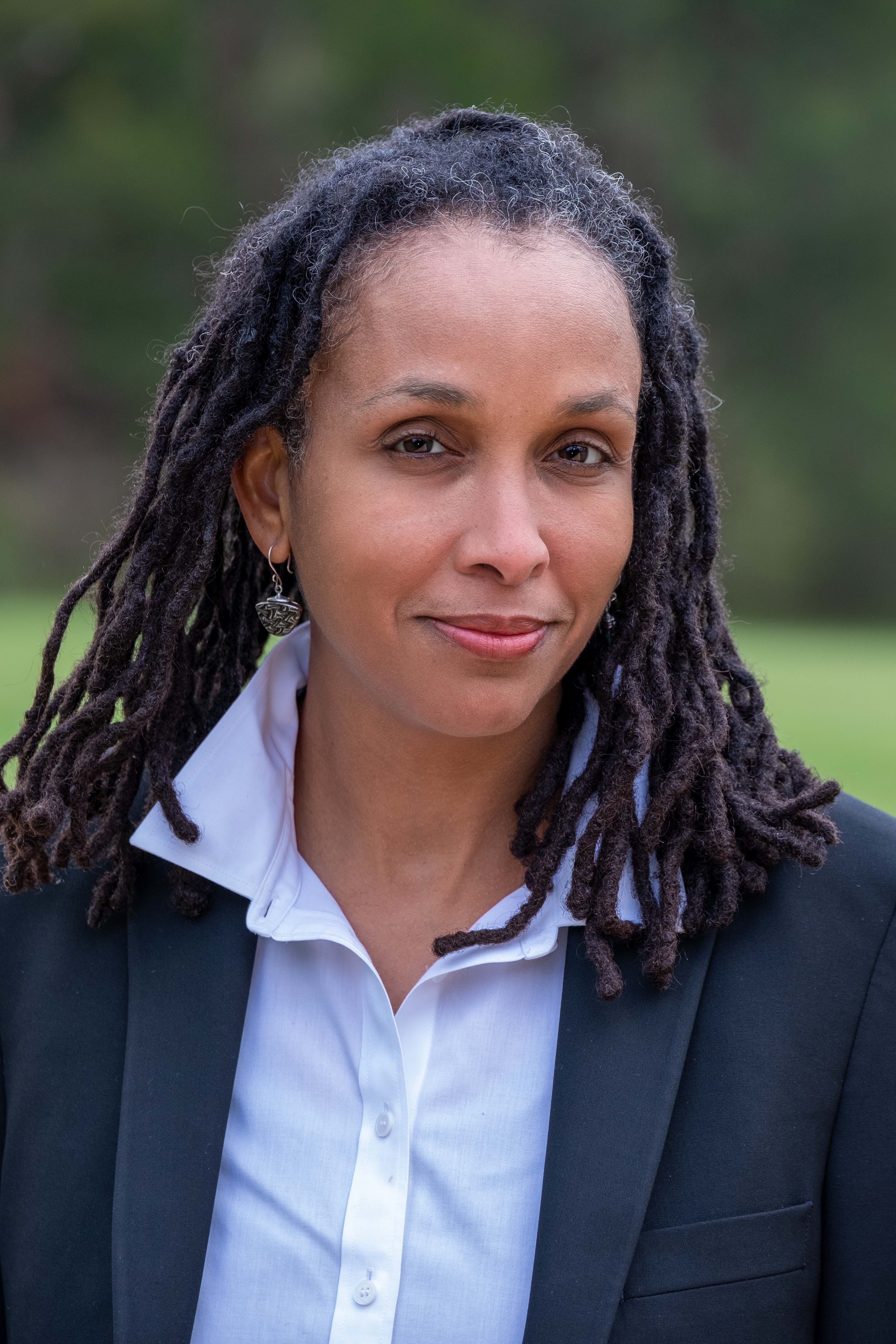
Mahshid Mayar: Hello and welcome everyone to the fifth installment of Sounds of Erasure. My name is Mahshid Mayar, and I have the pleasure of co-hosting today's interview together with my colleague and fellow erasure researcher Sandra Tausel. We are honored to welcome to today’s episode Crystal Simone Smith.
Sandra Tausel: Hello everyone, my name is Sandra Tausel and I’m very pleased to introduce Crystal Simone Smith today. Crystal is the author of several collections of poetry, among them Runagate: Songs of the Freedom Bound, published by Duke University Press in 2025, which was the winner of the Roanoke-Chowan Poetry Award, as well as Dark Testaments, published by Henry Holt in 2023. In 2022, her collection of Ebbing Shore, won the Haiku Foundation Touchstone Distinguished Book Award, and Crystal is the recipient of a Duke Humanities Unbounded Fellowship, and her work has appeared in numerous journals, including POETRY Magazine, Harper’s Magazine, Rattle, Frog Pond, and Modern Haiku.
She teaches in the Thompson Writing Program at Duke University and writes poetry about the human condition and social change. Today, we’re very excited to talk to her about her latest poetry collection, titled Common Sense (1776), Addressed to the Citizens of Today: An Erasure, which was just released by Beacon Press. And with that, welcome Crystal, thank you so much for joining us on Sounds of Erasure today.
Crystal Simone Smith: Thanks for having me.
MM: Thank you, from my side too, welcome to Sounds of Erasure. Let me begin by asking you to tell us a bit about your own history of encounters with erasure arts. Basically, in what context did you first encounter erasure? Are there any works of erasure that you have returned to over the years? And eventually, if you remember at all, when you realized that it is a practice that you personally wanted to try out in your own work?
CSS: Yeah, sure. I should first say that I was an art major in undergraduate study, and collage was my focus. So, it’s not a leap for me to infuse that into poetry composition.
Beyond that, it was interesting to me that blackout and erasure became a thing during the pandemic, during COVID. It was sort of trending on social media, probably because of the mishandling of the pandemic by President Trump. But it was sort of this response that I enjoyed. It was like, you know, read between the lines humor. And that really sort of led me to blackout poetry and writing Dark Testament. A lot of things led me to that.
But that was one of the things. And then I sort of became familiar with counter-narratives by a scholar named Alexandra Bell, who decided to sort of blackout or do erasure to New York Times stories. And also, you know, Nicole Sealey, also with the Ferguson Report. I really always loved and taught a book called Whereas by Layli Long Soldier, which is not erasure, but it sort of is a re-narrative of American history.
MM: Fantastic. So, focusing on your latest publication, Common Sense (1776), Addressed to the Citizens of Today: An Erasure. What stopped me in my tracks when I began reading your poetry collection was the phrase that you use “textual reveal” in naming what you have done in this poetry collection.
So, the source text that you have used is none other than Common Sense by Thomas Paine, which is a widely engaging, immensely popular document that’s nonetheless provoked a lot of backlash and sustained opposition when it reached the public in January 1776. So, the question that I have is, what did you find in Common Sense as a reader in the 21st century? What was in it and what was not in it?
CSS: Yeah, so I mean, if we're going to be honest, that document was propaganda.
MM: Absolutely.
CSS: Yes. The purpose was to onboard the inhabitants so they would agree to a war against Britain’s monarchy. And so, Paine was very effective. He was an effective writer and public speaker, so he accomplished that mission.
When I encountered the document, and I encountered it as I was teaching a lit course at a university, it just felt like that. It felt like propaganda, right? It’s like, this is a document with a purpose. I should say, I think as society, societies in general, we tend to hide our histories of sin, particularly if they're recent histories that can be sort of traced back to descendants. And so, I say that often. You know, I’ve been to other countries. America is a very young country that is still in the construction phase. So, this document does not reflect today’s citizens at all. So, it felt very distant for me.
It’s a very distant document, even though it’s only 250 years old. It’s sort of distant because we know what’s not in it. It was written particularly for white men who own land. That’s who it was written for. Although they were asking for everyone’s, you know, support. So that’s what was not in it. Everyone was not in it.
ST: Yeah, absolutely. And speaking of distance, I think that connects very nicely to the next question, because in the preface of Common Sense, you say it took some time to navigate the jargon or the King’s English, really. And we were wondering what were the biggest challenges in working with someone else’s structure and vocabulary from a different time, but also with a text that as a product is so unapologetically exclusionary, and yet still in an interesting, very emblematic of the issues that the United States faces today?
CSS: Yeah, so I’ve had a bit of experience working with historical documents. You know, I taught a slave narrative class. I read a lot of slave narratives. Also, you know, Lincoln in the Bardo is an historical, you know, fictional piece that I used to write Dark Testament. So, it’s not, um, it’s, you know, I've become sort of accustomed to that sort of language and jargon. But I will say, to read Paine’s work as an American is to feel excluded, right?
It’s a foundational text that still represents today’s Americans. It’s the creed we're supposed to follow. But yeah, the language is very archaic. And I can tell you, quite honestly, regardless of gender or race, that document would be sort of foreign to a lot of citizens in this country.
ST: Absolutely, yeah.
CSS: Yeah, they wouldn’t feel attached to it, you know, which is funny to me, because I find it humorous that it was formal and rigid. But he, sort of, explained it during that time period as plain speak, like, common speak. And I thought, wow, what is formal speak like?
But that’s how he explained it. And sort of, I think, you know, we moved really far away from the British monarchy once the war was over. And sort of figures like Noah Webster, Webster Dictionary, sort of decided, you know, we are going to leave that sort of British reserve behind. We’re going to be direct; we’re going to simplify our language. And so really sort of far away from it.
MM: Yeah. Which means it’s a project that you have been working on for a while, the result of which is this poetry collection, is the outcome of a series of intense, critical, readerly layers of relationship that you have struck with this anonymously published pamphlet. So, it’s a rereading and a resharing of this founding document with American citizens in 2026, which you also mentioned, feels alien, feels like it’s not really part of the active rhetoric, even though it is part of collective memory, basically, and collective identity.
So, at some point, you were convinced that erasure could reveal and make the source text speak otherwise. And in doing this, in reading Paine’s 18th century pamphlets, in order to craft the 21st century work of erasure out of it, you must have made a number of really important decisions. You drafted; you worked with different drafts of the work before you felt like the erasure that you wanted it to be is in front of you. And I was wondering if you could tell us a bit about these steps and the decisions that you made on your way to publishing the book.
CSS: Okay, so yeah, I mean, the parallels between the time periods and the political strife that we face today made this somewhat of an easy project to decide on, because it was just there. You know, sometimes as serendipity, you know, writers, things just fall in our lap, and we’re like, oh, this totally makes sense. I could totally see in the document, the political shift back to monarchy that Paine was opposing.
I started this erasure at a writer’s retreat in the mountains of North Carolina in the south of America. And so, it's very beautiful, but also, you know, it has its politics, right? There was literally a Trump store there. Trump was worshipped in that land, right? And the store sold racist merchandise, and it was just, so it was sort of the opposite setting for which I would want to write this in, but almost the perfect setting, because it’s erasure. And so, it made sense.
I think the reveal that you talk about was driven by the hypocrisy of the idea of freedom in a country that has oppressed so many human groups. Since its inception, it has done that. So as far as the steps, I just literally allowed the document to lead me. That’s what I did. And I found what I needed to find to reveal the, you know, the discrepancies and the hypocrisy. So, I think what I did is I picked up on what is not common sense today.
MM: That sounds wonderful. So, did you, as a follow-up question, did you work with several drafts of the work before you were satisfied? And then, I don’t know, you just scraped the previous versions that you had created. How did you work with the versions and drafts that you had?
CSS: Yeah, so it’s divided into four sections. That’s how Payne wrote it. And so there were certain sections that were much easier to dive into. And then there were other sections I’m like, ah, I don't know, you know, what does this look like? So yeah, I just sort of went about it. It, I should say, and you know this, erasure is painstaking because you’re in the opposite mode of working, right?
You’re like, instead of writing something, you are trying to, you know, uncover something. And so, I would say I had several drafts of a couple of sections. And I also worked with, my agent is actually a really wonderful editor as well. And so, when I would send her, you know, different versions, she’d say, is this what this is? Are you sure this is what this is? It’s important for every artist, every writer to have somebody else’s eye on it because you’re not working in a bubble and you’re not writing for yourself. So yeah, I had a lot of help with it. But yeah, there were several drafts.
MM: Fantastic.
ST: That makes sense. As a follow up to that, maybe, because we were wondering, were you always set on redacting this text from the very beginning? Or did you also think maybe about blacking it out or whitening it out? Or was this always going to be a redaction, so that readers were confronted with both versions of the text? And if so, how would you hope that readers engage in these two texts? And what to take away from the reading?
CSS: So, with Dark Testament, you kind of get pigeonholed into a genre. And you think, you know, I should probably write a second blackout, blackout poems book. But I started with blackout. And then I thought about it. And the language wasn’t rendering the way I needed it to. Because it was so archaic, that, you know, for me to black it out and leave certain words, it just it almost didn’t make sense.
But also, this is a foundational text that is available to every American. It’s a significant document in our history. And so, blackout would have silenced some of that hypocrisy. And it would have silenced the language that defines our nation. So, I didn't want that to be an issue. I didn’t want them to say, oh, this is more propaganda. She took an historical document, and she blacked out certain important parts of it. And I didn’t want that. So, I thought, you know, this is historical. Let’s leave it all here. Let's just reveal what I find to be the narrative of today. And so, I needed to leave all of it in.
ST: It’s also very powerful to have the original text present and the exclusions and the violence that exudes from it still present. I think that’s very powerful by itself.
CSS: Yeah, I’m excited to read if I get to do that, because yeah, most people have asked me to just read the redacted. They don’t actually ask me to read the other.
MM: Yeah, no, it would be fantastic if you can actually do this side-by-side reading, if you can call it that, because also Common Sense when it appeared first, it was read aloud, right? It was, thanks to its deliberately accessible type of language that we already also talked about, it was a product of its time. It was read across the late colonial America from taverns to street corners.
And there is an orality that really comes with its publication history. And that means that because in Sounds of Erasure, we think a lot about the ways that erasure sounds. We would like to, of course, invite you to please do a bit of reading of Common Sense, parts of it that you have selected for us, and then your own erasure. Thank you.
CSS: Okay, perfect. I’m gonna read from the third chapter called “Thoughts of the Present State of American Affairs.” And I will read a couple of pages and then I’ll follow with the erasure.
In the following pages I offer nothing more than simple facts, plain arguments, and common sense; and have no other preliminaries to settle with the reader than that he will divest himself of prejudice and prepossession, and suffer his reason and his feeling to determine for themselves; that he will put on, or rather that he will put off, the true character of a man and generously enlarge his views beyond the present day.
Volumes have been written on the subject of the struggle between England and America. Men of all ranks have embarked on the controversy, from different motives, and with various designs; but all have been ineffectual, and the period of debate is closed. Arms, as the last resources, decide the contest; the appeal was the choice of the king, and the continent has accepted the challenge. It hath been reported of the late Mr. Pelham (who tho’ an able minister was not without his faults) that on his being attacked in the house of commons, on the score, that his measures were only a temporary kind, replied, “they will last my time.” Should a thought so fatal and unmanly possess the colonies in the present contest, the name of ancestors will be remembered by future generations with detestation. (41-42)
So, I’m going to read a little bit of the erasure and may go beyond that point.
In the following pages I offer nothing more than simple facts, plain arguments, and common sense; and have no other preliminaries to settle with the reader than that he will divest himself of prejudice and prepossession, and suffer his reason and his feeling to determine for themselves; that he will put on, or rather that he will put off, the true character of a man and generously enlarge his views beyond the present day.
Volumes have been written on the subject of the struggle between England and America. Men of all ranks have embarked on the controversy, from different motives, and with various designs; but all have been ineffectual, and the period of debate is closed. Arms, as the last resources, decide the contest; the appeal was the choice of the king, and the continent has accepted the challenge. It hath been reported of the late Mr. Pelham (who tho’ an able minister was not without his faults) that on his being attacked in the house of commons, on the score, that his measures were only a temporary kind, replied, “they will last my time.” Should a thought so fatal and unmanly possess the colonies in the present contest, the name of ancestors will be remembered by future generations with detestation.
The sun never shined on a cause of greater worth. ’Tis not the affair of a city, a county, a province, or a kingdom, but of a continent—of at least one eighth part of the habitable globe. ’Tis not the concern of a day, a year, or an age; posterity are virtually involved in the contest, and will be more or less affected, even to the end of time, by the proceedings now. Now is the seed time of continental union, faith and honor. The least fracture now will be like a name engraved with the point of a pin on the tender rind of a young oak; the wound would enlarge with the tree, and posterity read it in full grown characters. By referring the matter from argument to arms, a new era for politics is struck; a new method of thinking hath arisen. All plans, proposals, &c. prior to the nineteenth of April, i.e. to the commencement of hostilities, are like the almanacks of the last year; which, though proper then, are superceded and useless now. Whatever was advanced by the advocates on either side of the question then, terminated in one and the same point, viz. a union with Great Britain; the only difference between the parties wasthe method of effecting it; the one proposing force, the other friendship; but it hath so far happened that the first hath failed, and the second hath withdrawn her influence. As much hath been said of the advantages of reconciliation, which, like an agreeable dream, hath passed away and left us as we were, it is but right, that we should examine the contrary side of the argument, and inquire into some of the many material injuries which these colonies sustain, and always will sustain, by being connected with, and dependant on Great Britain. To examine that connexion and dependance, on the principles of nature and common sense, to see what we have to trust to, if separated, and what we are to expect, if dependant. (41-43)
MM: Thank you!
ST: How wonderful. Thank you so much for the reading. I think our last question fits very nicely with the erasure you just read.
And I was wondering about in the context of the United States semiquincentennial and the present political and cultural moment in the U.S. and worldwide, how would you evaluate the potential of these different erasure techniques or of redaction to interrogate and disrupt narratives, maybe from original documents and founding documents, but also from documents that are erased today that hold so much sway over the collective consciousness, essentially?
CSS: Yeah, you know, I can only speak for the country that I live in. And it’s probably true across many nations. But, you know, most Americans have a very passed down or invented narrative of our foundation, right? They don’t engage often in historical text. Most Americans. History is revealing. And I think that that’s why so many people are selective about their engagement with it, because it reveals things that are uncomfortable. It exposes things that are bias, that are unfair.
I should say that, you know, sometimes I get asked the question, would you run for office? Would you, you know, would you engage in politics in that way? And I’m like, no, I would not do that. Not that it’s not necessary. Obviously, I respect politicians who do, but I don't ever want to sit in a room where I’m deciding who gets human rights and who doesn’t. You know, that’s a hard place to be in. When I was researching this project, it wasn’t surprising to find out that 20% of Americans had read Common Sense. And I’m going to tell you, I think that’s a high estimate.
ST: That is surprising, actually.
CSS: Yeah, that’s a high estimate. It’s probably not. And even though it says 20%, I would assume that none of them can recall what was in the document or can quote anything from the document, right? That’s just to be American. We sort of invent our narratives and our history. We don’t really engage in the actuality of it.
So, with historical documents and erasure and doing this, it’s for me, because I tend to like history, but for me, it’s also the process of bringing that to light, bringing fugitive slave ads to light, bringing the document Common Sense to light, so that people can sort of engage with it and say, okay, this is what history actually is. It's not what grandpa told me it was. It’s not what the public school system told me it was. This is the actual document, and I can be part of this, regardless of your political views.
ST: Absolutely. Yeah, maybe, because we still have time. One more follow-up question or connecting to that, because our project is also very interested in teaching erasure in classrooms. And so, I was going to ask you how you feel redaction and erasure is helpful in fostering students’ critical engagement with historical texts. And also, if you could tell us if you have taught erasure in the classroom, how did you approach that? Or how do you approach it? I think that would also be very interesting to know.
CSS: Yeah, I’ve actually taught blackout. That’s something that I've taught in classrooms. And I’m very open to kids, particularly younger students and high school students, critically thinking. And so, I’m like, this is just a free, open space. You can black out what you want. You can keep what you want. Your narrative can be whatever it is. If you want to take a document, like common sense, a foundational document, and make a love story, you can do that. You can do whatever you want to with it.
And that, the openness, I think, leads them to this freedom that they don’t necessarily have. When you say, okay, we're going to read a text, and now we’re going to discuss it. Because once you open that up, then it's kind of like, well, I have to edit myself, and I have to be reserved, and I have to make sure I’m trying to answer this appropriately. And you don’t have to do that with blackout and erasure. You just go for it. And so, I think it's a brilliant way to teach. I don’t get to teach that way very often, but it’s a brilliant way to teach kids to critically think with a path of freedom that they don't necessarily get to use.
ST: Yeah. Yeah. Because texts are so sacrosanct, usually, in the classroom. Yeah. Absolutely.
CSS: Yeah. It’s so funny. When I do assign readings, years ago, I used to have discussion questions. And I was, here’s the discussion questions. And you sort of lead them into, and I stopped doing that a long time ago. And I was like you post a discussion question. What is your question? You’ve engaged with this text, and I don’t need to put something in front of you that you can easily answer. You need to formulate a question that was not answered in this text for you. So.
ST: Yeah. That’s great. Sounds exciting for the students too.
CSS: Yeah.
MM: Absolutely. I just want to repeat to you, history is revealing, you said, and on that beautiful phrasing of what is at the heart of the project that you have been working on, on top of which then poetry is also revealing, and erasure poetry specifically. I wanted to thank you for your time, and for sharing your thoughts with us, and for sharing that beautiful reading. That was fantastic. Thank you, Crystal.
CSS: Thank you so much for having me.
ST: Thank you so much for coming on. We really appreciate it.
